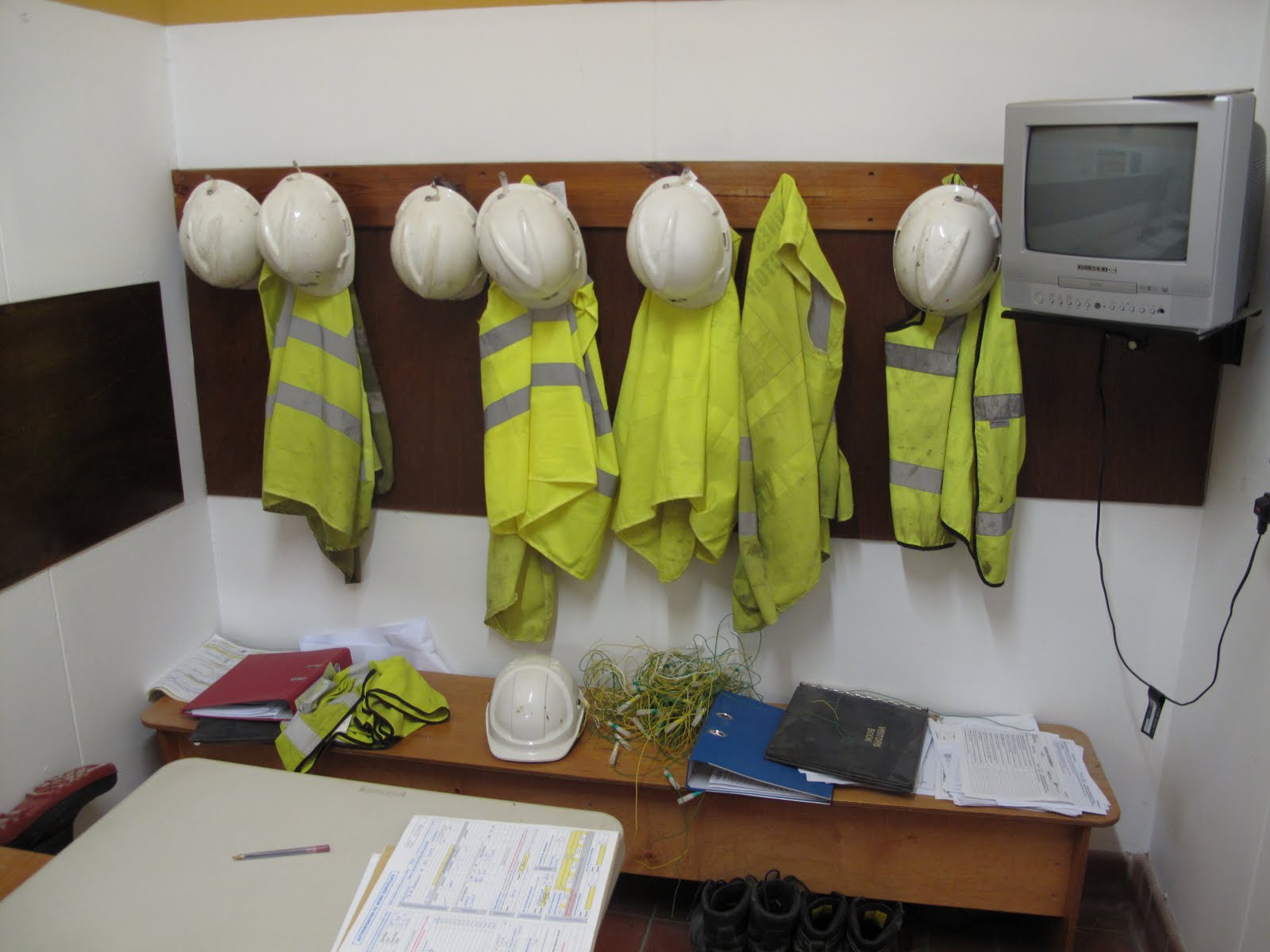
Following my visit to a gypsum mine in December, I have been testing whether the samples I collected there, can be refined into a usable plaster power, that will cure in the presence of water. So far it would appear it does.
If you were to applied the rules of the farmers market to the design of objective, what would the outcomes be?
Saturday, 8 January 2011
It is plaster: Local gypsum into plaster
Following my visit to a gypsum mine in December, I have been testing whether the samples I collected there, can be refined into a usable plaster power, that will cure in the presence of water. So far it would appear it does.
Friday, 7 January 2011
Chorley mousetrap: Hollands 'Proper pies and puds'
In conjunction with the coal I collected from Cutacre open cast mine in Bolton, I using Hollands pie production process to fabricate my mouse trap, for the Chorley farmers market.
Wednesday, 5 January 2011
Lougborough: Eel and finger traps

The third and final mousetrap to be design as part of my 'Trapped by abundance' series is one for Loughborough and its surrounding area. To produce this trap I am using wool from the Leicester Longwool sheep and the fabrication process to produce socks, as they are characteristic of this reogion.
In order to realise this trap using these regional attributes, I need to consider what trapping mechanisms could be devised to allow for thr conjunction between this material and process.
Tuesday, 21 December 2010
Potentially local: Soil types
When considering how generic processes for production can be used to make locally sensitive products, we must decide what aspects of these local areas we chose to influence these designs.
Other than sociological and economic factors, we can also explore how environmental and ecological characteristics can influence these designs. The first I have chosen to research is differences in soil types and how this would dictate the designs of garden equipment produced using this new manufacturing resources in different regions.
Here is a simple categorisation of different soil types in the UK, as found on The European Agricultural Investment Services website. Though in reality soils are combination of types, in 'varying quantities' and each one is unique to its origin or locale.
Here is a interactive map, Soilscapes, that can be used to locate the different types of soil found in this project's three locations Chorley, Lewes and Loughborough.
Experiments to follow.
Thursday, 16 December 2010
Lewes: Gypsum mine
Sunday, 5 December 2010
Characteristic of the region
When exploring ways of realising potential resources for production in local environments, like widely available skills like key cutting and orthopaedic casting, we must also take into consideration we can remove the genericism of the skills and invoke local relevance in these products for the local user.
One approach of attempting this could be by tailoring this resources/processes so that that the products they fabricate are sensitive to cultural and social trends characteristic to the region of their use.
Here is a link on the from the National Office of Statistics on regional trends
'Regional Trends brings together official statistics, analysis and guidance to assist those with an interest in places in the UK to understand the complex relationships between locations and the people who live there.'
Chorley Trap; Cutacre mine
Yesterday I was even the great opportunity to be toured around UK coal's open cast mine, Cutacre, just outside of Bolton. The scale of the site is really quite staggering and gives a intriguing insight into the scales of extraction and refinement the site operates. The sites last commercially viable deposits are due to be extracted by February 2011, with the the mine 'filled in' with 15-18 months of that target date.
The abundance of coal in the region Chorley is in, makes it a relevant choice for the constituent material to use in the trap I am hope to design for this region. The challenge lies how to refine coal into a material that could be formed into a functioning mousetrap (Experiments to follow).
Subscribe to:
Posts (Atom)